 Hapoo
Hapoo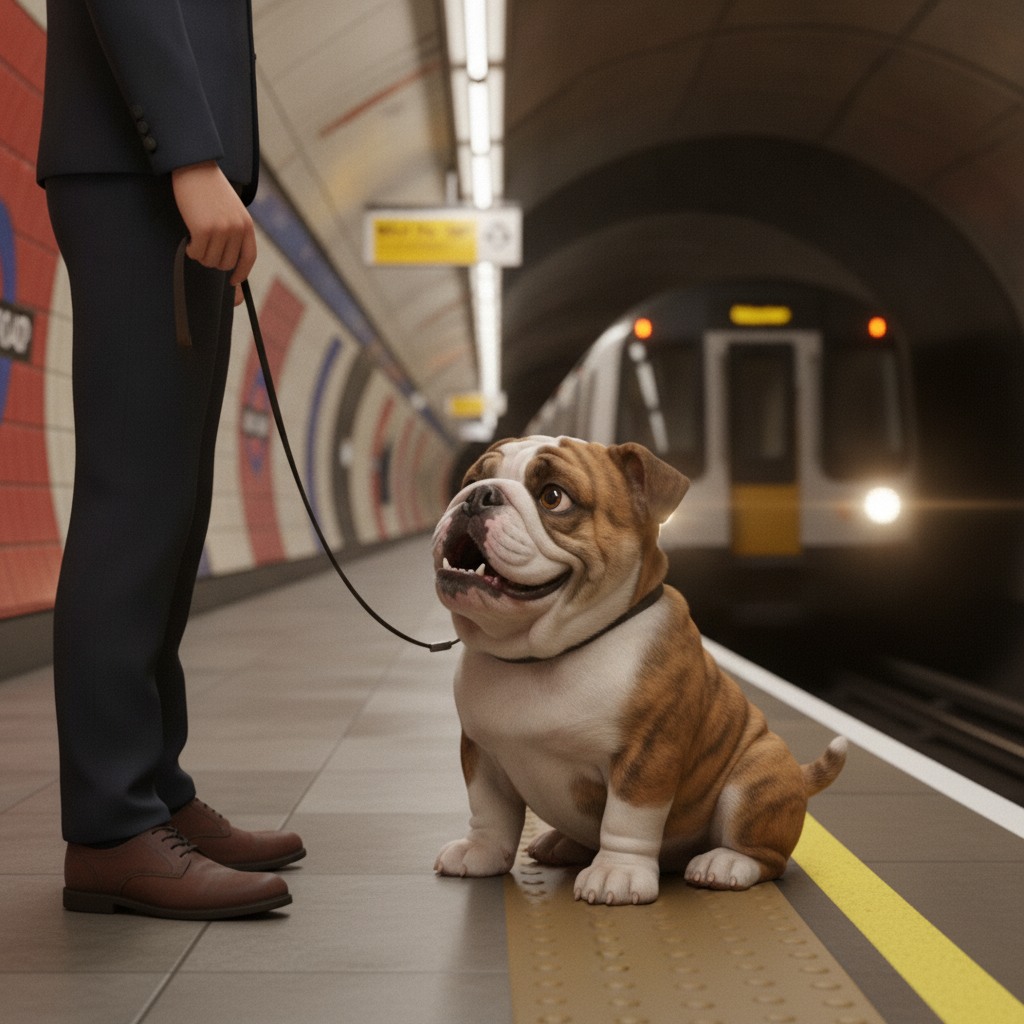
Most new London dog owners ask this within the first month, usually right before a trip that would otherwise mean a very long walk: can the dog actually come on the Tube? The short answer is yes, generally — but "generally" is doing some real work in that sentence, and it's worth knowing where.
The Underground and DLR
Dogs are allowed on London Underground and DLR trains, and you don't need a ticket for them. The one rule that catches almost every new owner out at least once: dogs must be carried on escalators, not walked on them. It's not a suggestion — station staff will stop you at the bottom if you try to walk a dog onto one. For a dog too big to comfortably carry, that means finding the lift or the stairs instead, which isn't always signposted as clearly as the escalator is.
Beyond that, it's largely a matter of staff discretion during genuinely exceptional circumstances — a packed rush-hour train during a service disruption isn't the moment to test whether your dog enjoys tight spaces. On an ordinary journey at an ordinary time, nobody's likely to look twice.
Buses
Dogs are welcome on London buses too, again with no separate fare, subject to the same practical discretion — a driver can reasonably ask you to wait for the next bus if the one in front of you is already standing-room-only. Assistance dogs are the one category this never applies to: they're always permitted, full stop, regardless of how busy the bus is.
The one habit worth building early: keep the dog on the floor, not on a seat, even on an empty bus. It's the kind of small thing that makes the difference between a driver who doesn't think twice and one who does.
National Rail and the Overground
Once you're past the Underground network and onto proper National Rail services (which the London Overground and Elizabeth line both connect into), the general pattern holds — dogs travel free, don't need their own ticket, and aren't required to occupy a seat. Specific limits (how many dogs per passenger, whether they need to stay in a carrier) vary slightly by train operator, so it's worth a quick check of the specific operator's own site before a longer trip out of the city, rather than assuming every operator's rule is identical.
What actually goes wrong
It's rarely the network's stated rules that cause a problem — it's usually one of a small number of predictable things:
A dog that's never done stairs, lifts, or moving floors before its first Tube trip. The rumble, the enclosed platform, the doors closing on a schedule that has no interest in whether your dog is ready — all of it is a lot to process the first time. Doing a short, quiet, off-peak practice run before a trip that actually matters is worth the extra half hour.
Forgetting water on a hot platform. Underground platforms run noticeably warmer than the street above them, especially in summer, and there's often a longer wait than expected between trains on some lines.
Assuming every driver or guard has seen it all before. Most have, but a calm, matter-of-fact "he's fine, thank you" goes further than either apologizing excessively or getting defensive if someone asks a question.
Why this is worth knowing at all
None of this is really about the Tube. It's about not letting "I'm not sure the dog's allowed" quietly rule out half the city — a park on the other side of London, a friend's flat two zones over, a dog-friendly patch of grass that happens to be a twenty-minute ride rather than a twenty-minute walk. The trip there counts as much as the walk once you're there, which is the whole point of not needing to press a button or open an app to have it noticed in the first place.
Once you've done it a couple of times, it stops being a decision and just becomes how you get to the good parks — which, if you've been sticking to whatever's in walking distance so far, opens up more of the city than most owners realise is actually on the table.