 Hapoo

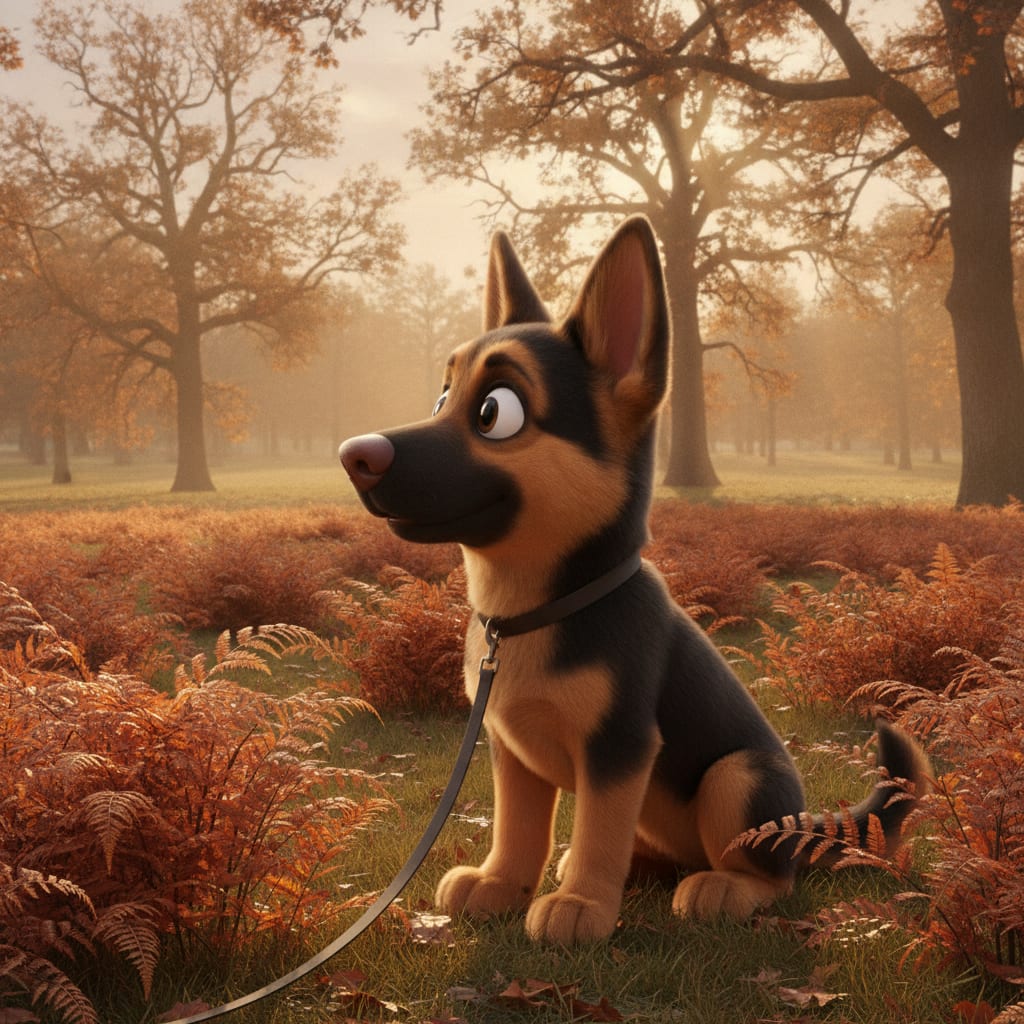
Every autumn one London dog-walking story reliably turns up in the local papers, and it is always more or less the same story. A dog off the lead in Richmond Park, a stag in the middle of the rut, and an owner who did not know that the second thing changes what the first one means.
This is roughly when it starts. General awareness, not an instruction sheet: the Royal Parks' own deer safety page and the signs up in the park on the day are the sources that actually matter, and they are updated as the season moves. This is here to explain why the advice exists, because "keep your distance" is much easier to follow when you know what you are keeping a distance from.
What the rut actually is
Richmond Park and Bushy Park both hold free-roaming herds of red and fallow deer. They are not an enclosure, a petting attraction, or park furniture. They are wild animals living in a public space, which works remarkably well for most of the year and then stops working quite so smoothly for about six weeks.
From roughly late September into early November, the males compete for mates. That means roaring, chasing each other, thrashing bracken, and clashing antlers. A stag in the rut is running on hormones, has not been eating or sleeping properly, and is scanning constantly for rivals. The tolerance it showed you in July is simply not there in October.
The numbers are the argument
Ordinary "be careful around wildlife" advice tends to wash over people because the scale is vague. Here it is not vague. A rutting red deer stag can weigh over 25 stone and move at something like 30 miles an hour, carrying a set of antlers it is actively looking for a reason to use.
That is the entire case for the distances. The Royal Parks ask visitors to stay at least 50 metres from deer, and to make it 100 metres if a male looks active. Fifty metres is further than it sounds when you are estimating it across open grass. It is roughly the length of a football pitch's width, or a good long throw, and it is considerably more than the distance most people are standing at when they take the photograph.
Why a dog changes the maths
Here is the part worth being honest about. Most people who get hurt in these incidents were not the ones who approached the deer. The dog went, and then they went after the dog.
A dog does not read a stag as a large animal to be avoided. It reads movement, and possibly something worth chasing. A stag reads an approaching dog as a threat, and its response is not to leave. So the Royal Parks ask for dogs on leads during the rut, and that is the whole of it: a dog on a lead cannot close the distance you have carefully kept, and cannot pull you into closing it either.
There is a second, quieter reason. Dogs chasing deer is treated seriously, and not only as a safety matter. Deer have been killed in these parks after being chased, which has real consequences for the owner as well as the animal. If you want the current position on that, the Royal Parks and the park's own police presence are the ones to ask, not a blog.
The practical version, for an actual walk
None of this means avoiding Richmond Park in October. It means walking it slightly differently for a few weeks.
Lead on, in the open areas. The wide grassland and the bracken are where the deer are, and the bracken is exactly where you will not see one until you are close. Some people keep to the perimeter paths and the woodland gardens through the rut and go back to the open park in November, which is a reasonable trade rather than a defeat.
Do not try to get the photograph. The roaring carries, and the instinct to walk towards it is strong. It is a genuinely extraordinary thing to watch, and it is worth watching from a sensible distance with a phone that is not going to do it justice anyway.
Read the ground, not just the horizon. Deer bed down in long bracken and are effectively invisible from thirty metres. If you can hear roaring, you are closer than the sound suggests.
Check before an early walk. Both parks run deer management in the winter months, which can mean gates opening later than usual on some mornings. The park's own page is the place to check that rather than turning up and finding out.
If a deer does come towards you, the advice is to move away steadily, keep the dog close and under control, and put something solid between you and it if there is anything to hand. Do not run, and do not turn it into a chase in either direction.
The other window, in spring
Autumn gets the attention, but the same 50 metre rule matters again in roughly May to July, when the does have their young. The reason is different and the risk is just as real: a doe with a fawn nearby is protective in a way she is not at any other time of year.
Fawns are also frequently left lying alone in long grass while the mother feeds elsewhere. They are not abandoned, and they do not need rescuing. They very much do not need a dog investigating them, which is the realistic version of the risk for anyone reading this.
What it means for the walk itself
A lead-on walk through Richmond Park in October is still a good walk. It is arguably a better one, because you spend it watching an actual wild spectacle happening a safe distance away rather than watching your dog. The distance the deer need is not really a restriction on the walk. It is the thing that makes walking there possible at all.
And the walk counts exactly the same. Hapoo counts the walk that happens, on whatever lead, for whatever reason, without asking you to justify why today's was on a path rather than across the grass. A month of lead-on autumn walks in a park full of rutting deer is a month of walks, not a month of compromises.
If you want the wider picture of where dogs can and cannot go off the lead across the city, the borough-by-borough version covers the rest of London, including the other Royal Parks and the seasonal rules that shift in much the same way this one does.