 Hapoo
Hapoo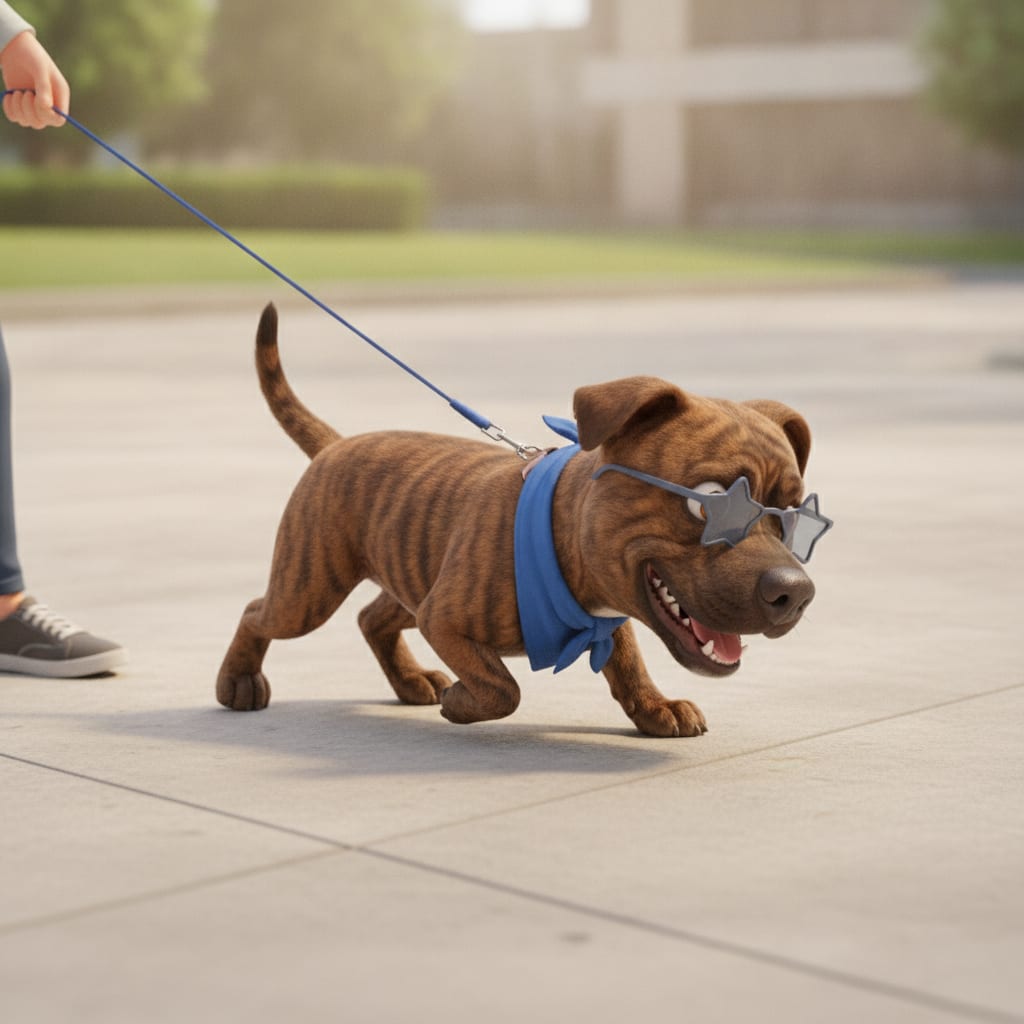
Most lead-pulling advice is written with a fair amount of open space in mind — room to stop, room to change direction, room to let a dog settle before trying again. A narrow London pavement at a busy hour doesn't really offer any of that, which is why techniques that work fine in a park sometimes seem to fall apart on the street outside your own front door.
It's rarely defiance
Dogs naturally walk faster than most people do, and a city street packs an enormous amount of interesting information into a short stretch of pavement — other dogs, food smells, people, noise. Pulling is usually a mismatch between your pace and their interest level, not a dog ignoring you on purpose. That reframing matters, because it points toward managing the mismatch rather than "correcting" something that isn't really disobedience.
General techniques worth knowing about
None of this is a substitute for a trainer if it's a real, persistent problem — a trainer who can actually watch your dog do it will get you further, faster, than anything written here. As general awareness, though, a few approaches come up consistently: stopping completely the moment the lead goes tight and only continuing once it slackens again (slow, but consistent, and it teaches the actual mechanic rather than just interrupting it once); changing direction unpredictably when pulling starts, so forward momentum stops being a reliable reward for pulling; and a front-clip harness, which is a management tool that makes pulling physically less effective rather than a fix for the habit itself.
Why London specifically makes this harder
A quiet suburban street gives a dog pulling toward something room to overshoot and settle before you're both boxed in. A narrow London pavement at a busy hour often doesn't — there's a wall on one side, a road on the other, and someone walking straight at you in the middle. The stop-and-wait method still works here, but it's slower going and more disruptive to other pedestrians, which is worth planning around rather than being caught out by.
The practical London-specific fix
Do the actual training reps somewhere quieter than your main route, even if that means a short walk to a calmer side street before tackling the busy stretch. A dog that's had a chance to practice loose-lead walking somewhere with fewer distractions generalises that better to a busier street later than one whose only experience of walking nicely on lead was immediately under maximum pressure.
The bit that doesn't wait for the training to finish
A dog that pulls the whole way there and back is still having a walk that counts exactly as much as a perfectly loose lead the whole way — Hapoo notices the walk itself, not how tidy the lead manners were along the way. Worth remembering on the days training feels like it's going nowhere: the walk still happened, and that's the part that was never actually in question.