 Hapoo
Hapoo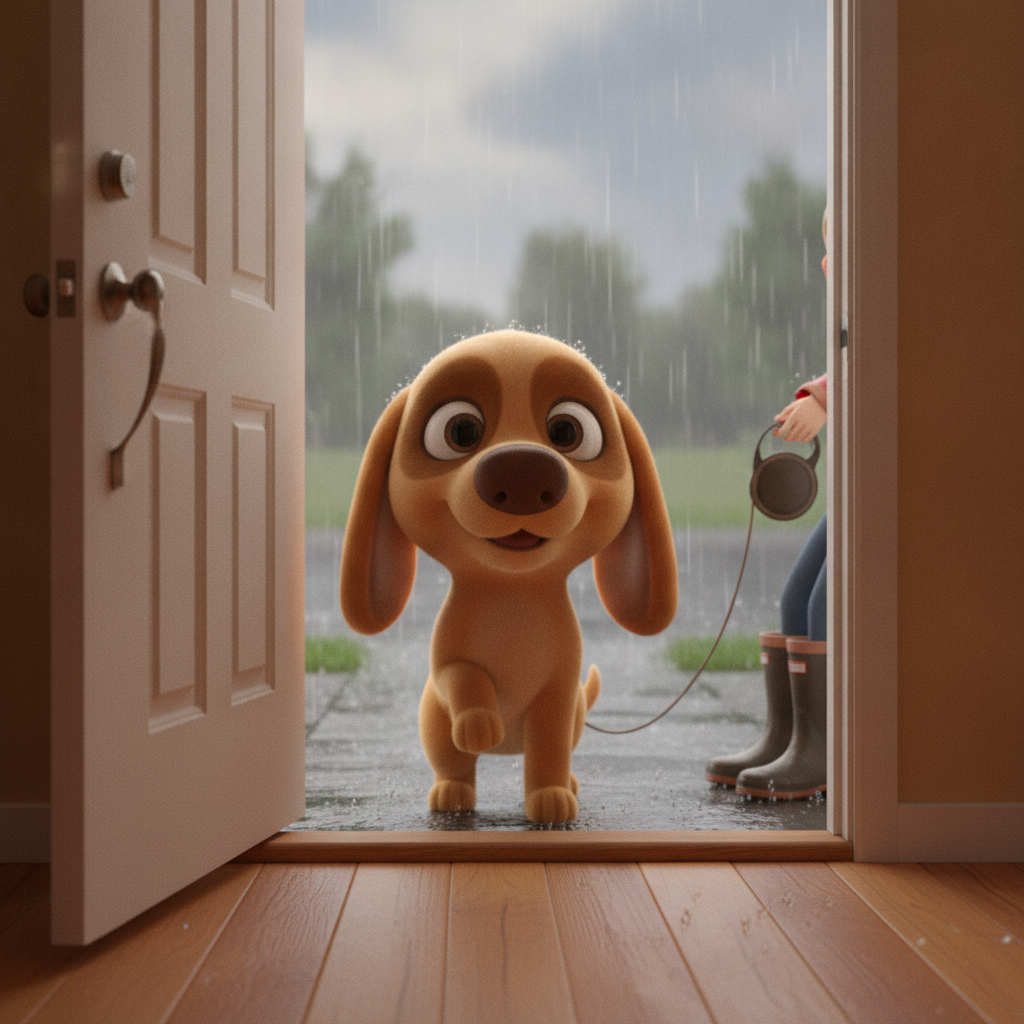
London doesn't really do dramatic weather. There's rarely a storm dramatic enough to make skipping the walk feel justified — just a grey Tuesday that's been drizzling since eight, the kind of low-grade wet that never quite stops long enough to wait out. It's the least photogenic reason a streak breaks, and by a wide margin the most common one.
It's not really about the rain
Ask most owners why the walk got skipped and "the weather" is the answer, but that's usually shorthand for something more specific: the dog stalling at the door, planting its feet on the step, doing the thing where it looks at the wet pavement and then back at you like you've suggested something unreasonable. The rain is real, but the actual obstacle is a negotiation with an animal that has, quite sensibly, learned that wet grass is unpleasant on paws and worse on a belly.
That negotiation is exhausting in a way that has nothing to do with fitness or discipline. It's a small daily argument you didn't sign up for, and after enough grey Tuesdays, skipping it starts to feel less like giving up and more like self-preservation.
Why the usual advice doesn't help much
Most of what gets suggested — a raincoat, a faster route, treats at the door — helps at the margins and does nothing for the actual problem, which is that the walk has started to feel optional. Once a walk feels optional, weather becomes a permission slip rather than an obstacle, and permission slips get used.
The deeper issue is that a lot of walking apps quietly make this worse. An app built around a big "start walk" button and a live GPS trace turns a five-minute, reluctant, everybody's-getting-wet circuit of the block into something that visibly doesn't count for much next to yesterday's forty-minute park loop. So the short wet walk stops feeling worth logging at all, which — combined with a dog who'd rather not go — is how a single grey week turns into a habit that's quietly stopped existing.
The short version still counts
This is the actual fix, and it's less about the rain than about what the walk is measured against. Hapoo counts from your phone's motion sensor, not a GPS trace you have to remember to start, which means a genuinely short, damp, straight-there-and-back walk registers as exactly what it is — a walk that happened — rather than a diminished version of a better one. There's nothing to open, start, or forget on the way out the door, which matters more on the days you're already negotiating with a dog who doesn't want to be out there either.
And on the days the walk genuinely doesn't happen — because the rain did win, or the dog dug in and stayed dug in — the streak decays rather than snapping to zero. A short grace period, then a gradual cost, not a reset that makes the next four weeks feel like they didn't happen. That distinction sounds small until you're the one deciding whether Thursday's walk is worth doing when Monday already broke the number.
A habit that survives a wet week is worth more than a streak that only survives good weather.
What actually gets a reluctant dog out the door
None of this is dog-training advice — that's a job for someone who knows your specific dog, not a blog post — but a few things hold up across most reluctant-in-the-rain dogs:
Go before the negotiation starts. The stalling gets worse the longer a dog stands at an open door watching rain hit the step. A quick "lead on, straight out" beats a slow build-up where there's time to plant.
Shrink the walk, don't skip it. A five-minute loop around the block is a completely different offer to a dog than a forty-minute park circuit, and often an easier one to say yes to. It's also, per the point above, still a walk that counts.
Towel by the door, not an afterthought. A lot of the post-walk reluctance is really pre-emptive — dogs that hate being toweled down start resisting the walk that leads to it. Making the towel routine quick and unremarkable removes a second obstacle disguised as a first one.
Let a short one be enough. The instinct to make up for a missed long walk with an extra-long one the next dry day is understandable and usually backfires — it turns walking into a debt to be repaid rather than a thing that happens most days at roughly the size it happens to be.
The actual goal
Nobody's dog needs a perfect record through a wet British autumn. What they need is a walk that still feels worth doing on the days it's short, damp, and mildly reluctant on both ends of the lead — and an app that agrees with that assessment instead of quietly implying otherwise. That's a lower bar than most streaks are built around, which is exactly why it's the one worth keeping.